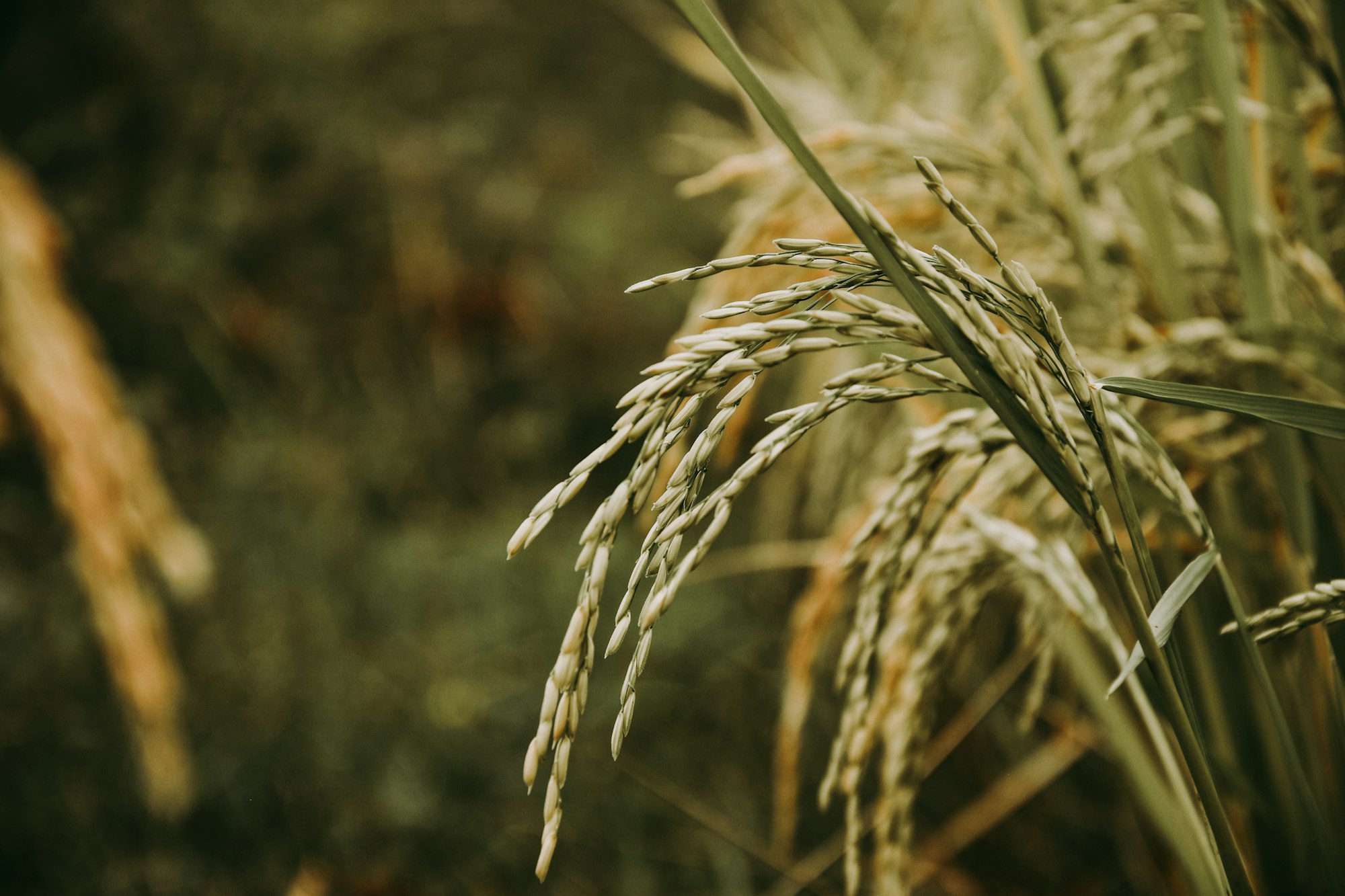
Assam produces about half of India’s tea and remains the country’s single largest tea-growing state. The industry supports more than a million livelihoods: from plantation workers and smallholders to the network of traders, factories, and transporters that move Assam tea from the Brahmaputra Valley to cups across the world. That industry was built on a specific set of climatic conditions: a long, evenly distributed monsoon, mild summers, warm and humid nights, and a predictable harvest calendar. The production statistics suggest those conditions are now under measurable stress.
According to the Tea Board of India, Assam’s tea output fell to 658.92 million kg in 2024, down from 688.33 million kg in 2023— a decline of 29.41 million kg, or 4.46 per cent in a single year. The 2025 season offered little relief. Between January and July, Assam’s tea gardens had produced just 68 million kg, down from 91 million kg in the same period a year earlier— one of the sharpest mid-season contractions in over a decade.
The rainfall record that season sheds some light on the cause. There was a 25 per cent deficit against the annual normal of 2,577 mm, with June running 39 per cent below normal. The same month saw Assam and Meghalaya sub-divisionsreceiving only 297.7 mm of rainfall against the normal of 486.6 mm.
What the production record reveals is a longer climatic shift that is now quantifiable at the district level using the Council on Energy, Environment and Water’s (CEEW) Climate Resilience Analytics and Visualisation Intelligence System (CRAVIS). This interactive climate resilience atlas records key metrics such as extreme hot days, heavy rainfall events, dry spells, and temperature variability spanning over 40 years of past climate trends and nearly four decades of future projections.
What makes Assam tea uniquely vulnerable to climate change?
Tea is among the most climate-sensitive perennial crops grown at commercial scale in India. Its productivity lies in a narrow envelope with temperatures of roughly 13–30°C, well-distributed annual rainfall of 1,500–3,000 mm, and relative humidity between 70 and 90 per cent. Within that envelope, the most valuable harvests, the first flush in March–April and the second flush in May–June, depend on a precise sequence of pre-monsoon showers, mild daytime temperatures, and cool nights. A single dry March or a heat spike in May can erase the year’s premium output.
Assam’s tea comes from a narrow strip of the Brahmaputra Valley, and within that strip, just five districts in Upper Assam — Dibrugarh, Tinsukia, Jorhat, Sivasagar, and Golaghat — account for the majority of output. There is no easy geographic substitution. Unlike annual crops such as paddy or wheat, tea bushes takefive to seven years to reach commercial yield after planting, and the underlying soils, drainage, and microclimate of the Brahmaputra Valley are not easily replicated elsewhere.
The geographic limitation and long crop cycles make the economics of climate stress in Assam’s tea belt particularly sensitive. The industry is labour-intensive and operates on thin margins. Average all-India average auction prices in 2025 fell 7.1 per cent year-on-year even as climate stress pushed up the cost of pesticides, irrigation, and labour. Declining yields, falling prices, and rising costs converge on the same producer at the same time.
How is rainfall variability affecting Assam’s tea bushes?
June–September rainfall in Upper Assam fluctuates sharply, swinging by as much as 550 mm between consecutive years and dipping below 1,300 mm in more than half of all years on record (Figure 1). This degree of variability carries direct consequences for yield. Even a one per cent increase in average daily precipitation during the monsoon is associated with a 0.2 per cent reduction in tea yield. At the same time, dry spells have lengthened, and rainfall is increasingly delivered in short, intense bursts . It is exactly thisrainfall pattern — variable, intense, poorly distributed — that most reliably causes yield loss, more so than drought severity alone. A bush that cannot rebuild its soil moisture reserves between consecutive deficit years has no buffer when the next dry spell arrives.
The pre-monsoon dry spells encapsulate the severity of climate change. Data from CRAVIS shows a clear rise in dry-spell length and 2022 stands out as a near-record year (Figure 2). A Mann-Kendall trend analysis across all five Upper Assam districts confirms this is no anomaly — Dibrugarh (S=212), Golaghat (S=193), Jorhat (S=177), Tinsukia (S=170), and Sibsagar (S=128) all show a consistent increasing trend in dry-spell length, with a combined district score of S=189, affirming that the rise in dry spells across the region is statistically significant and long-term. The Mann-Kendall (M-K) Test is used to analyse data collected over time for consistently increasing or decreasing trends.
When the rains do arrive after a prolonged dry spell, they come in short and intense bursts, causing soil runoff instead of infiltration and damaging the shallow root systems that tea bushes depend on. The premium harvest is delayed, compressed and in the worst years, largely lost.
What does rising heat mean for Assam’s tea yield and quality?
Warming exacerbates the damage caused by rainfall variability. Once monthly average temperatures exceed 26.6°C, the effect on yield is directly negative. When the temperature goes above 30°C, bushes slow down their growth to conserve water.
Above 35°C, the damage moves from suppression to destruction: leaf tissue degrades and the aromatic compounds that define cup quality are lost before harvest. Warmer and more humid conditions also accelerate proliferation. As a result, insects that didn’t survive earlier affect tea farms.
The damage that matters most to price, however, happens at night. Tea requires cool nights to synthesise the sugars, amino acids, and aromatic compounds that make a first-flush Assam distinctive in the cup. Warmer nights are also a problem for tea plants, even though people often overlook this. Tea needs cool nights to build the sugars and flavours that give it a good taste. When nights stay too warm, the tea quality goes down.
Data from CRAVIS confirms this is not a passing fluctuation — a Mann-Kendall trend analysis of hot nights exceeding 25°C across Upper Assam districts returns an S-score of 216, a statistically significant and consistent increasing trend over four decades (p=0.012). Sen’s Slope (used to calculate slope in a way that is least sensitive to outliers) of 0.52 means the region is accumulating roughly one additional hot night every two years — adding up to approximately 20 more hot nights per year today than in 1985.
What do CRAVIS projections say about the future of Assam’s tea?
As per projections from CRAVIS, days with maximum temperature greater than 35°C will rise to 11.1 days per year in the late-century, 18 per cent higher than 2011–2024.
Figure 5: CRAVIS projection of days per year with Tmax > 35°C in Upper Assam districts — historical period (1981–2010) vs late-century (2051–2070) under RCP 8.5
Source: CRAVIS
The picture is sobering. Under RCP 4.5, Upper Assam districts are projected to see a substantial rise in heat-stress days by mid-century, with a corresponding contraction in the months suitable for high-quality leaf production. Under RCP 8.5, rising temperature in Brahmaputra Valley means that the condition suitable for growing tea shrinks to a few weeks of the year. These projections align with global assessments; the FAO has warned that climate change could shrink India’s tea-growing areas by up to 40 per cent by 2050 due to rising temperatures and erratic rainfall.
How can Assam’s tea industry adapt to rising temperature and erratic rainfall?
Adapting Assam's tea sector to a changing climate will require simultaneous action at the policy level as well as at tea plantations.
- Diversify planting materials through portfolio-based investment planning: Tea is a multi-decade, high-sunk-cost capital, which makes uniform varieties a concentrated financial risk.Systematically allocating investments across planting materials with varying tolerances to heat, drought, and erratic rainfall builds resilience into the plantation itself.
- Moving past monoculture can ensure livelihood and soil resilience: Assam’s agroecology, characterised by its diverse flora and faunaand sensitivity to local climate shifts, is poorly served by strict monocropping. Integrating shade trees, soil-restoring plants, and indigenous crops such as amaranth alongside tea can moderate plantation temperatures, reduce erosion, and improve yields over time. Research by theFAO and theInternational Food Policy Research Institute consistently shows that diversified agroecological systems are essential for restoring soil health, regulating local microclimates, and buffering agricultural shocks.
- Improve water resilience across the tea belt: On-estate water harvesting and more efficient irrigation can help estates capture intense rainfall events and buffer against longer dry spells. Small growers, who account for 99 per cent of Assam's 1,22,478 tea gardens, covering 34 per cent of the approximately 449 thousand hectares, currently lack most of this infrastructure, and need targeted financing and technical support.
- Embed climate data into routine decisions: District-level data on temperature, rainfall, dry-spell length, and pest risk should be integrated into everyday estate management and into the design of public support for the sector, rather than consulted only after a bad season.
- Scale collective private sector action for sustainable procurement: Trustea, an Indian sustainability verification system launched in 2013, offers a great precedent for collective action by the private sector. Governed by a multi-stakeholder council, it addresses localised challenges — labour conditions, food safety, agrochemical use — rather than generic global standards, and places producers at the centre. By 2022, 65% of Indian tea production was Trustea-certified. Building on this, food and beverage companies that procure tea could collectively share the costs of ensuring sustainable sourcing. Such collaboration could also unlock cost-effective ways of reducing Scope 3 emissions – indirect emissions generated across the supply chain — and create new markets for sustainably produced tea.
Assam's tea belt is facing a structural shift in the climate conditions that made it productive in the first place. The window for adaptation is still open, but it is narrowing with each monsoon that arrives too late, too briefly, or all at once.
Vaibhav Chugh is a Team Lead, Yashi Gupta is an Associate Product Manager, and Shashwat Shukla is a Research Analyst at the Council on Energy, Environment and Water (CEEW). Send your comments to yashi.gupta@ceew.in.